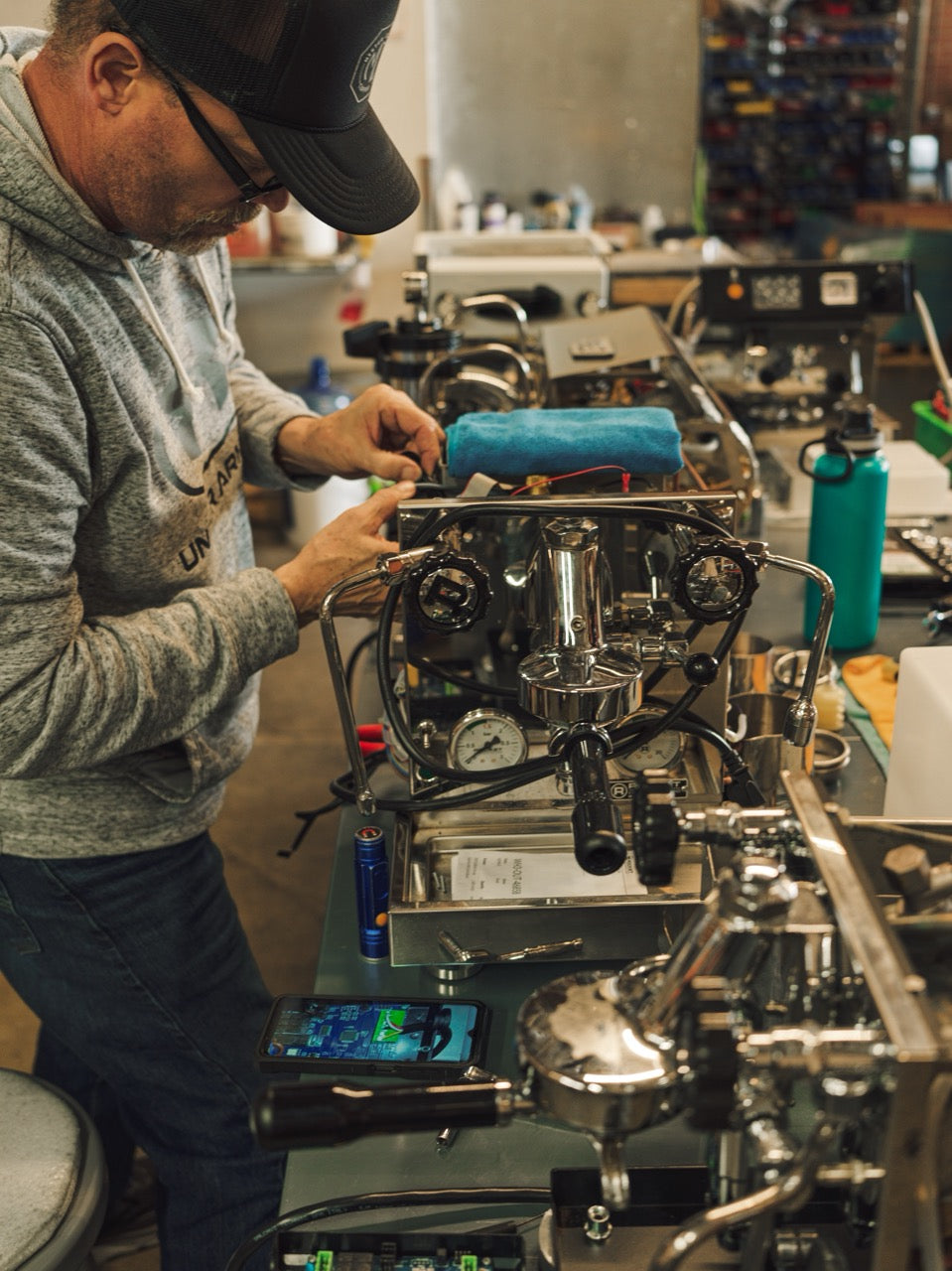
That bitter, ashy taste creeping into your morning espresso isn't your beans going stale — it's your machine crying for help. Scale buildup, coffee oil residue, and old grounds trapped in the group head are the silent assassins of great espresso. The good news? A 30-minute cleaning routine can bring your shots back to life. Here's exactly how to do it, step by step, whether you're running a single-boiler home setup or a commercial dual-boiler workhorse.
01
Why Descaling Actually Matters
Every time water flows through your espresso machine, it leaves behind trace minerals — primarily calcium and magnesium. Over weeks and months, these minerals crystallize into a chalky layer called limescale that coats the inside of your boiler, heating element, and water pathways. The consequences are real and measurable.
Scale acts as an insulator between your heating element and the water. That means your machine works harder to reach brewing temperature, pulls more electricity, and still delivers inconsistent heat. You'll notice extraction times drifting, shot temperatures fluctuating, and steam pressure dropping. Left unchecked, scale can block water flow entirely and cause permanent damage to internal components.
Scale Impact on Machine Performance Over Time
Estimated heating efficiency loss without descaling. Based on average water hardness of 150–200 ppm.
Beyond the machine itself, scale affects flavor. Mineral deposits alter the chemical interaction between water and coffee grounds during extraction. Shots become dull, bitter, or chalky — and no amount of grind adjustment or dose tweaking will fix what's actually a machine hygiene problem.
If your espresso has gradually become more bitter or your machine takes longer to heat up than it used to, scale is almost certainly the culprit. Don't chase the grind — clean the machine first.
02
The Daily Cleaning Routine (5 Minutes)
Great espresso maintenance starts with daily habits. None of these take more than a minute, and they prevent 80% of the grime that causes problems down the line.
Weekly Maintenance Time Investment
Total weekly time: ~50 minutes. Daily habits account for the majority of effective maintenance.
After Every Shot
Purge the group head. Run water through the group head for 2–3 seconds after removing the portafilter. This flushes spent coffee oils and fine particles from the shower screen and gasket area. It takes three seconds. Make it automatic.
Wipe the portafilter basket. Knock out the puck and give the basket a quick wipe with a dry cloth. Coffee oils go rancid quickly — that oily, dark residue you see building up in the basket is yesterday's coffee turning into today's off-flavors.
Wipe the steam wand immediately. Milk dries like concrete on a steam wand. If you let it sit for even 10 minutes, you're in for a scrubbing session. Wipe with a damp cloth right after steaming, then purge a quick burst of steam to clear the internal tip.
End of Day
Remove and rinse the portafilter and basket. Pull the basket out of the portafilter, rinse both under hot water, and set them to dry. Some baristas soak the basket in hot water for a few minutes — this loosens any oils that a quick rinse might miss.
Empty the drip tray and water tank. Standing water breeds bacteria and mold. Dump the drip tray, give it a wipe, and if you won't be using the machine tomorrow, empty the water tank too.
03
Weekly Backflushing Your Group Head
Backflushing is the single most important maintenance task for any espresso machine with a three-way solenoid valve — which includes most semi-automatic and automatic machines worth owning. If your machine has a three-way valve (you'll know because the group head releases pressure with a hiss after you stop a shot), you should be backflushing weekly.
What you need: a blind filter basket (a rubber or metal disc with no holes), espresso machine cleaning powder (like Cafiza or Puly Caff), and five minutes.
Backflush Process — Step by Step
Step 1 — 30 sec
Insert blind filter + cleaning powder into portafilter
Step 2 — 60 sec
Run pump 10 sec on / 10 sec off × 5–6 cycles with detergent
Step 3 — 30 sec
Rinse blind filter, remove cleaning powder
Step 4 — 60 sec
Run 4–5 plain water cycles to flush detergent
Step 5 — 30 sec
Pull one throwaway shot to clear the system
Total time: approximately 4–5 minutes. This routine removes coffee oil buildup from internal passages.
A machine that's backflushed weekly will outperform a neglected machine costing twice the price.
A note on machines without three-way valves: Some entry-level machines (like the Breville Bambino or Rancilio Silvia without the Pro upgrade) don't have three-way solenoid valves. These machines can't be backflushed. Instead, remove the shower screen weekly and soak it in a solution of hot water and cleaning powder for 15 minutes, then scrub with a soft brush.
04
Monthly Descaling: The Full Process
Descaling dissolves the mineral buildup inside your boiler and water pathways. The frequency depends on your water hardness — if you're using unfiltered tap water in a hard-water area, monthly descaling is warranted. If you're using filtered or softened water, you can stretch to every 3–6 months.
Recommended Descaling Frequency by Water Hardness
Water hardness measured in parts per million (ppm) of calcium carbonate. Test your water with an inexpensive TDS meter.
Choosing a Descaling Solution
You have two options: citric acid and commercial descaling solutions. Citric acid is inexpensive and effective — dissolve about 25 grams in a liter of warm water. Commercial solutions from brands like Durgol or the manufacturer's own product are formulated for specific materials and are the safer bet for high-end machines with brass boilers. Never use vinegar. It's too weak, leaves a persistent taste, and its acetic acid can damage seals and gaskets.
The Descaling Process
Fill your water tank with the descaling solution. Turn on the machine and let it heat up. Run about a quarter of the solution through the group head, then another quarter through the steam wand. Then turn off the machine and let the remaining solution sit in the boiler for 15–20 minutes. This contact time is what actually dissolves the scale.
After soaking, turn the machine back on and run the remaining solution through the group head and steam wand. Empty the drip tray. Now fill the tank with fresh, clean water and run the entire tank through — half through the group head, half through the steam wand. Repeat with a second tank of fresh water to ensure no descaling solution remains. Pull and discard two shots before making coffee.
Check your machine's manual before descaling. Some manufacturers, including La Marzocco, specify that their machines should only be descaled by authorized service technicians — descaling a plumbed-in commercial machine incorrectly can cause leaks and void warranties.
05
Water Quality: The Root Cause Most People Ignore
Here's the counterintuitive truth about descaling: the best strategy is making it unnecessary. If you control your water quality, scale becomes a minor concern instead of a recurring battle.
Ideal Espresso Water Profile (SCA Recommendation)
All values in ppm except pH. Water outside these ranges affects both machine longevity and extraction quality.
Espresso extracts best with water that has a total dissolved solids (TDS) level between 75 and 150 ppm, with a calcium hardness between 35 and 85 ppm. Water that's too soft extracts poorly and can corrode copper boilers. Water that's too hard scales your machine aggressively and muddies the flavor.
The simplest upgrade most home baristas can make is using a quality water filtration system. An inline filter like a BWT Bestmax or an in-tank filter reduces scale-causing minerals without stripping the water of the compounds that make espresso taste good. For the truly committed, Third Wave Water mineral packets let you build water from scratch using distilled or reverse-osmosis water as a base.
At minimum, use filtered water from a Brita or similar pitcher filter. It won't eliminate scale formation completely, but it'll slow it dramatically and improve your shot quality overnight.
06
When to Call a Professional
DIY maintenance handles the routine stuff. But some situations call for professional service — and knowing the difference can save you from turning a small problem into an expensive one.
Call a technician if: your machine leaks water from anywhere other than the drip tray, the pump sounds different than usual (grinding, stuttering, or much louder), you see scale flakes coming out of the group head despite regular descaling, the boiler won't reach or maintain temperature, or steam pressure has dropped significantly and cleaning the wand tip didn't help.
Annual Maintenance Cost — Preventive vs Reactive
Average annual cost for premium home espresso machines ($2,000–$5,000 range). Preventive maintenance reduces total cost of ownership by up to 60%.
Annual professional servicing is also worth considering for machines over $1,000. A technician will replace gaskets and seals that wear over time, clean internal components you can't access, check electrical connections, and calibrate temperature and pressure. Think of it like an oil change — preventive maintenance is always cheaper than emergency repairs.
For commercial machines in a cafe or office setting, quarterly professional service is standard. The volume and duty cycle of a commercial environment accelerates wear on every component, and a machine going down during service means lost revenue.
Whether you're troubleshooting a temperamental espresso machine or planning your next equipment upgrade, our team of service specialists and equipment advisors is here to help you keep your machine running at peak performance.
Explore Our Services