Coffee Industry Trends 2026: Five Shifts Reshaping How the World Brews
From pressure profiling going mainstream to the machine that practically thinks for you, here is what is actually changing in espresso equipment right now.
The espresso machine market has changed more in the last eighteen months than in the decade before it. Features that used to separate a $6,000 commercial setup from a $600 home unit now ship standard on machines under $1,500. Pressure profiling, once the domain of barista competitions and specialty cafe back-bars, is no longer a premium add-on. PID temperature control, a differentiator just five years ago, is table stakes. If you have not looked at what is available in 2026, your picture of what your budget can buy is probably a generation out of date.
This is not a buyer's guide. It is a map of the five forces reshaping the market right now, so that when you do look at machines, you know what is genuine progress and what is marketing noise. Here is each one, what is driving it, and what it means when you are ready to buy or upgrade.
The Prosumer Revolution Hits a Tipping Point
The word "prosumer" has been floating around espresso circles for years, but 2026 is the year it stopped being aspirational and became descriptive. The category that once referred to a narrow band of enthusiast machines, priced between $1,500 and $3,500 and bought by a relatively small slice of home baristas, now accounts for a growing share of total machine sales in North America.
A few things drove this. The specialty coffee third wave matured to the point where a real slice of home drinkers have worked a commercial machine, trained as baristas, or spent enough time at good cafes to know what a properly pulled shot actually tastes like. Once you know what you are chasing, the $300 pod machine stops being satisfying. The gap between recognizing quality and being able to produce it at home has become the market, and manufacturers have caught on.
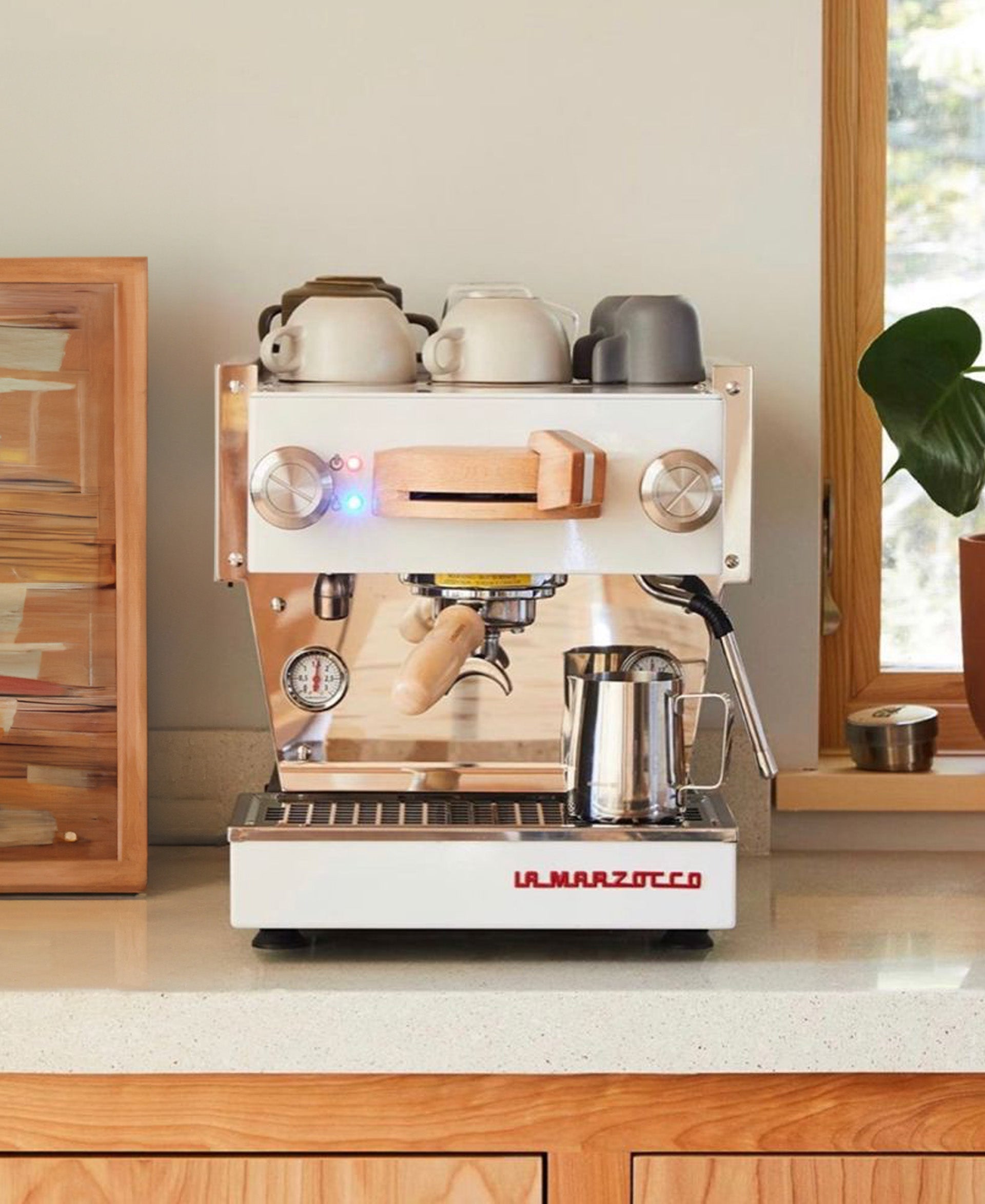
Manufacturers responded by pushing serious hardware into realistic price points. La Marzocco's Linea Mini R brought genuine dual-boiler performance into home kitchens. Rocket's Appartamento packed a heat exchanger into a compact Italian chassis at $2,100. Lelit's Bianca V3 added paddle flow control for real pressure profiling under $3,000. The gap between a well-equipped home setup and a cafe back-bar has never been smaller, and buyers know it. The prosumer category is not growing because marketers invented a new label. It is growing because the machines now actually deliver on what the label implies.
Pressure Profiling Goes Mainstream
Pressure profiling, the ability to control and vary the pressure applied to your coffee puck throughout the extraction, was for years a specialty within a specialty. Machines like the Slayer and the original La Marzocco GS3 offered it at price points that made it a professional tool. The idea was simple: different pressures at different phases of extraction produce different flavor results. A soft pre-infusion at low pressure followed by a peak, then a ramp-down, pulls different compounds from the same coffee than a flat nine-bar extraction does.
What changed is that electronic pressure control components dropped in cost, and manufacturers figured out how to integrate them without inflating the whole machine price. Lelit's Bianca V3 flow control paddle gives you genuine profiling at the group head, letting you shape extraction from pre-infusion through the full shot. In 2026, pressure profiling is showing up across a much wider price range, which means the question has shifted from "can I afford this feature" to "do I actually want it." For most serious home baristas, the answer is yes.
If you are working with light roasts, and they have been gaining ground steadily as the third wave matured, this matters a lot. A flat nine-bar extraction on a bright Ethiopian natural can come out harsh and astringent. The same coffee, with a soft pre-infusion and a controlled pressure ramp, opens up into something completely different. That is not an enthusiast footnote. It is why the machine you brew on matters as much as the beans you put in it.
Sustainability Moves Up the Spec Sheet
A few years ago, "sustainable espresso machine" was mostly a marketing claim with little engineering substance behind it. What has changed in 2026 is that sustainability is being built into machine architecture itself, not just the language around it.
The most concrete changes are in energy consumption and material longevity. New boiler designs, particularly in the prosumer category, are achieving faster heat-up times at lower wattage. Machines that previously required 1,400 watts to reach operating temperature are now doing it at under 1,000 watts. This is partly a regulatory response to European energy directives, which have pushed manufacturers to rethink thermal efficiency across their entire lineup. The benefit for US buyers is that the efficiency improvements have carried over into global product lines.
More meaningfully, the conversation around repairability has shifted. The industry's move toward modular, user-serviceable components is accelerating. Boilers, group heads, solenoids, and pumps that are designed to be replaced, rather than discarded with the machine, are becoming a genuine differentiator. Brands with strong parts availability and service networks are gaining ground over those that prioritize low price over longevity. A machine that lasts fifteen years and absorbs a hundred dollars in parts every three years has a substantially different environmental and financial profile than one replaced every five.
The Smart Machine Moment
Smart connectivity in espresso machines has been a slow burn. The first app-connected machines arrived almost a decade ago and, for a long time, the implementation ranged from gimmicky to genuinely frustrating. Bluetooth connectivity that dropped, apps that were never updated, features that existed in the marketing copy but not in actual use. The cynicism was earned.
In 2026, that is not the full picture anymore. A newer generation of connected machines, built by manufacturers who designed the hardware and software together rather than bolting Bluetooth onto an existing platform, is delivering on the actual promise. Remote preheating from your phone. Programmable pressure profiles saved and recalled by name. Shot logging that tracks temperature, flow rate, and yield so you know exactly what changed the day a shot tasted different. These features exist, and they work the way they are supposed to.
The honest take: connectivity is genuinely useful if you want to log and iterate, if you approach dialing in the same way a competitive athlete thinks about training data. The tools are there for that person now. For everyone else, the most useful thing a connected machine can do is preheat itself before you walk into the kitchen on a Tuesday morning. That one feature alone is worth evaluating. The rest is a bonus.
What This Means for Buying Right Now
The five trends above are not just interesting context. They have direct implications for what you should look for, and what you should ignore, when evaluating a new machine in 2026.
PID temperature control is now the baseline. Any machine without it is a generation behind, and you should not pay a premium for it in 2026. If you steam milk more than a few times a week, a dual boiler or heat exchanger is worth it because you will not be waiting for the machine to cycle between brew and steam modes. The Rocket Appartamento is the clearest example of this done well at a realistic price point.
If you are working with single-origin beans or light roasts, pressure profiling is worth taking seriously. It is not a luxury feature anymore. The Lelit Bianca V3 gives you genuine flow control at $2,999, and it is one of the best investments in extraction quality at that price. If you are not ready to spend that, look for machines with pre-infusion capability as a minimum.
On sustainability: ask about parts availability before you buy. A machine with a strong US service network and available parts is worth significantly more than one with no repair path, even if the sticker price is lower. At Coffee Machine Depot, every brand we carry has the service infrastructure to back it up. That is not an afterthought in how we curate what we stock.
Machines Referenced in This Article
Available at Coffee Machine Depot
Dual boilers, saturated group head, app connectivity, and semi-automatic paddle. The machine that brought genuine La Marzocco engineering into the home.

Heat exchanger boiler with simultaneous brew and steam capability in a compact footprint. Italian build quality at a price that makes the prosumer upgrade realistic.

Dual boiler with paddle flow control for manual pressure profiling. The machine that made cafe-grade extraction experimentation accessible under $3,000.

Saturated group head, dual boilers, and the La Marzocco app for programmable profiles. The benchmark for what a fully connected home machine should do.
See What Just Landed at CMD
We update our new arrivals regularly with machines that reflect exactly what this piece is about: better thermal engineering, accessible pressure profiling, and brands with the build quality to justify the investment. If 2026 is the year you upgrade, start here.
Shop New ArrivalsReferences
1. Grand View Research. (2025). Coffee Machine Market Size, Share & Trends Analysis Report, 2025 to 2030. Grand View Research, Inc.
2. Specialty Coffee Association. (2024). 2024 Coffee Consumer Trends Report. SCA Publications.
3. European Commission. (2023). Ecodesign Regulation for Household Appliances: Energy Efficiency Standards Update. Official Journal of the European Union.
4. Hoffmann, J. (2022). The World Atlas of Coffee. Mitchell Beazley. [Referenced for extraction science context.]
5. Perfect Daily Grind. (2025). "How Pressure Profiling Is Reshaping Home Espresso." Perfect Daily Grind. perfectdailygrind.com.