A Cafe Owner's Buying Guide
Most cafe owners spend months agonizing over the espresso machine and an afternoon picking the grinder. That is backwards. The grinder is half the shot, and in 2026 it is also where the most important technology in the category is happening. Here is how to spec the right one, tier by tier, with the specific models worth your money.
Ask any roaster or competition barista what they would upgrade first in an underperforming cafe and most will say the same thing: the grinder. The espresso machine gets the showroom attention because it is the centerpiece on the bar. But the grinder is what determines particle size, dose consistency, and how much your shots drift across a busy shift. A world-class machine fed by a mediocre grinder produces mediocre coffee. The reverse is far more forgiving.
This guide covers what actually matters when speccing a commercial espresso grinder in 2026: the grind-by-weight shift that is reshaping the category, how to match a grinder to your volume and workflow, and our tiered recommendations from entry-level on-demand units to the high-end gravimetric grinders running the busiest bars in the world. If you want to pair this with the machine side, read our companion piece on how to spec a commercial espresso machine for your cafe.
Why the grinder is half the shot
Espresso is an extraction problem, and the grinder controls the two variables that drive extraction more than anything else: particle size and dose. Get either one wrong and no amount of machine quality fixes it.
Particle size determines how fast water moves through the puck. Burr geometry, burr size, and burr condition all feed into how uniform that grind is. A uniform grind extracts evenly. A grind with too many fines and boulders channels, runs fast in some spots and slow in others, and gives you a muddy, inconsistent cup. This is why worn burrs quietly wreck shot quality long before anyone notices the grinder is the problem.
Dose is the other half. A 0.3-gram swing in dose changes your ratio, your extraction time, and your flavor. On a manual on-demand grinder, dose drifts all day as beans settle, humidity changes, and baristas eyeball the basket. Removing that variance is exactly what the biggest grinder trend of 2026 is built to do.
The grind-by-weight shift
Grind-by-weight, also called gravimetric or GbW, is the defining feature trend in commercial grinders right now. Instead of grinding for a set time and hoping the dose lands where you want it, a GbW grinder weighs each dose on a built-in scale and stops when it hits your target weight. It removes the single biggest source of dose variance from the bar.
The practical effect is consistency that does not depend on the barista. Whether your most experienced person is on bar or a three-week trainee is covering a rush, every dose lands within a fraction of a gram of target. For multi-bar operations, single-origin programs, and cafes that change coffees often, that repeatability is worth real money in reduced waste and fewer remakes.
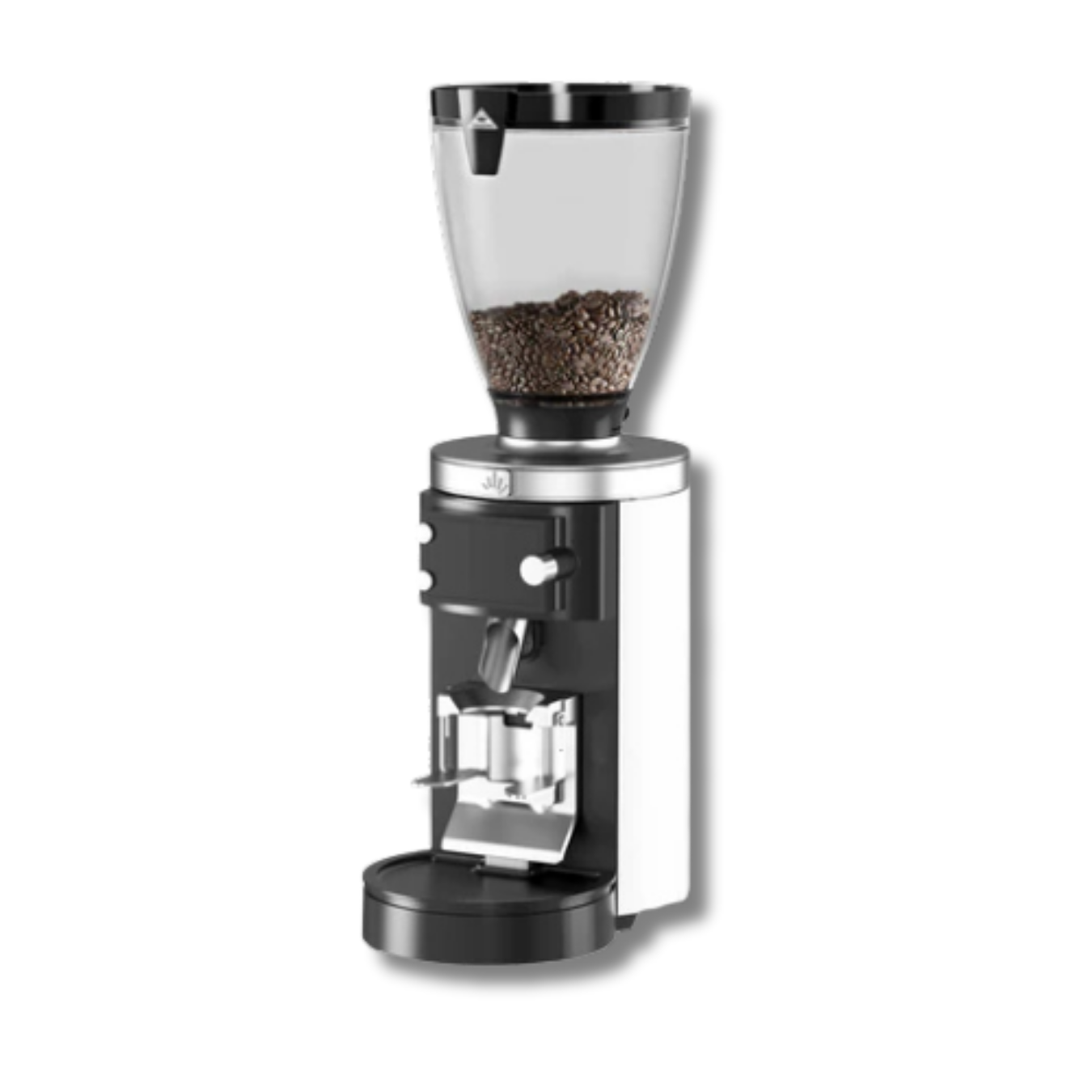
The Mahlkonig E65S GbW is the most widely used gravimetric grinder in cafes globally, and for good reason: it pairs proven burrs with a reliable scale system and a clean workflow. For higher-volume bars, the larger Mahlkonig E80S GbW steps up burr size and throughput and runs around $3,500. These are the grinders you see behind the bar at serious specialty shops, and they set the benchmark the rest of the category is chasing.
Who Actually Needs Grind-By-Weight
GbW earns its premium fastest in three situations: multi-bar cafes where workflow has to be identical across stations, single-origin and rotating-coffee programs where you redial often, and high-volume bars where shaving seconds and grams across thousands of shots adds up. If you run one espresso and one decaf at modest volume, a great time-based grinder may serve you just as well for less money.
How to choose: the four decisions that matter
Picking a commercial grinder comes down to four questions, answered in order. Get these right and the model reveals itself.
Match the grinder to your peak-hour throughput
Estimate peak-hour shots, not daily totals. A grinder that keeps up at 40 shots an hour can choke at 120. Higher volume needs faster throughput and better heat management, which is where larger burrs and stronger motors earn their place. Under-spec the grinder and it becomes the bottleneck on your busiest, most profitable hour.
64mm, 75mm, or 83mm
Burr diameter affects throughput and heat. Larger burrs grind faster and run cooler at volume, which protects flavor during a rush. A 64mm flat burr is a strong, efficient choice for low to mid volume. A 75mm burr is the modern workhorse sweet spot for most independent cafes. An 83mm burr is built for high-volume bars that need to grind quickly all day without overheating.
Single-dosing versus hopper, and how much coffee gets stuck inside
A traditional hopper grinder keeps a column of beans loaded and is fastest for a single high-volume espresso. Single-dosing, where you grind one dose at a time, suits cafes that change coffees often and want minimal waste between dials. Retention, the coffee left inside the grinder after each dose, matters most for single-origin and rotating programs where stale carryover muddies a fresh coffee.
Pair the grinder budget proportionally to the machine
The most common spec mistake is putting a great espresso machine next to a grinder that cannot keep up with it. Under-grinding a great machine wastes it. As a rule, the grinder should be a serious line item, not an afterthought, and your house and decaf grinders together should scale with the quality and volume of the machine they feed.
Pricing tiers at a glance
Commercial grinder pricing falls into three broad bands in 2026. Entry-level on-demand grinders start at around $800. The mid-range workhorse sweet spot, where most independent cafes should be shopping, runs roughly $1,200 to $2,000. High-end gravimetric grinders run $3,500 and up.
| Model | Burr Size | Best For | Approx. Price |
|---|---|---|---|
| Entry-level on-demand | 64mm flat | Owner-op bars, low volume, single espresso | From ~$800 |
| Eureka Atom Specialty 75 | 75mm flat | Quiet, clean mid-volume workflow | ~$1,200 to $1,800 |
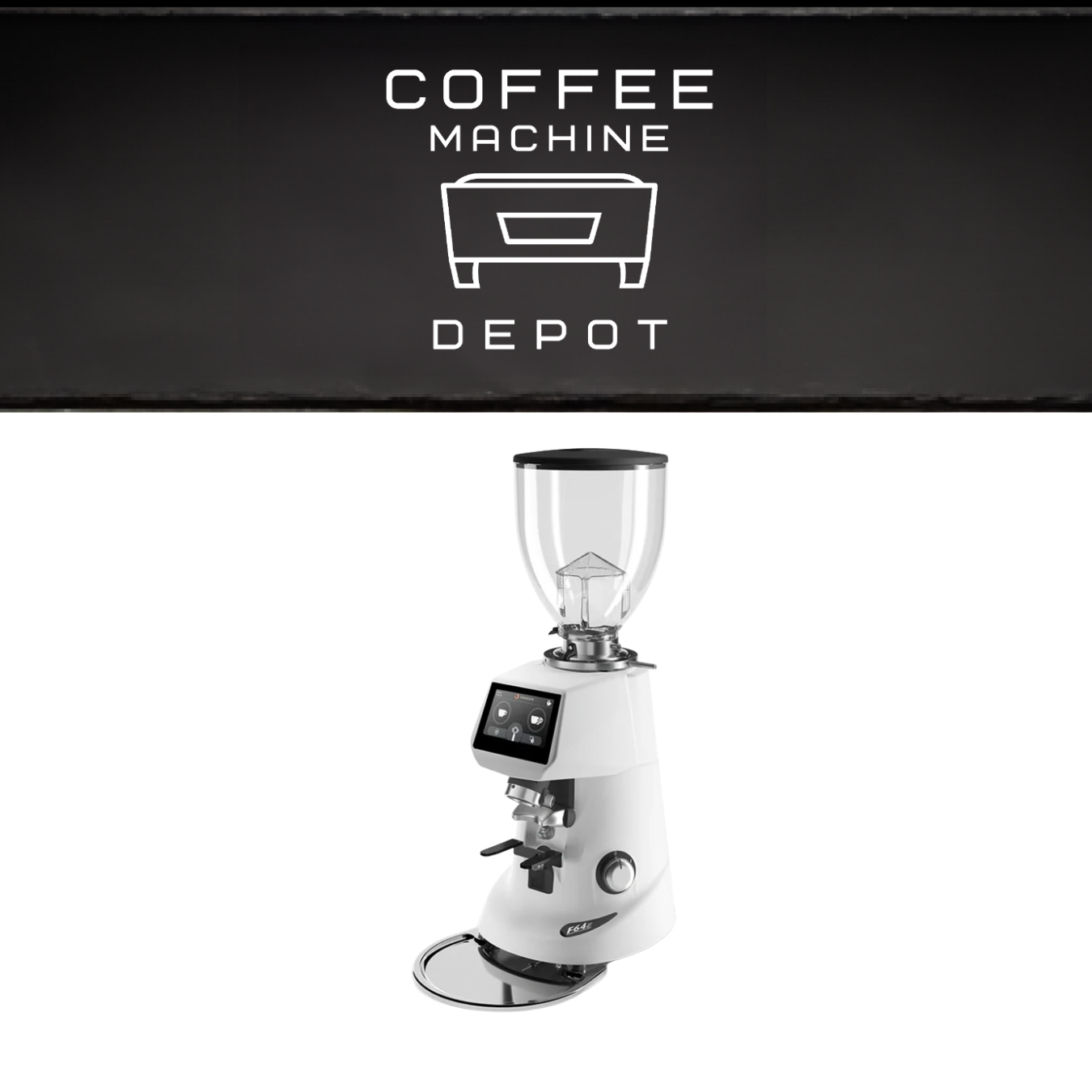
| Fiorenzato F64 EVO | 64mm flat | Mid-range value, dependable daily driver | ~$1,200 to $1,600 |
| Fiorenzato F83 E Sense Pro | 83mm flat | High-volume, touchscreen, stepped adjust | ~$2,000 to $2,800 |
| Mahlkonig E65S GbW | 65mm flat | Most-used gravimetric grinder worldwide | ~$3,200 to $3,800 |
| Mahlkonig E80S GbW | 80mm flat | High-volume gravimetric, busiest bars | ~$3,500 and up |
Prices vary by finish, configuration, and dealer. Treat these as planning ranges, not quotes. For current pricing and stock, see our commercial grinders collection or call the shop.
Tier 1: Entry-level on-demand, from around $800
The entry tier covers single-group bars, owner-operated cafes, and concepts running modest volume on one espresso. These are on-demand grinders, meaning they grind to a timed dose on each shot rather than holding a pre-ground reservoir. They are dependable, simple, and a real step up from anything built for the home.
A solid 64mm on-demand grinder
For a small bar, a quality 64mm flat-burr on-demand grinder handles the load comfortably and leaves room in the budget for a better machine and proper water treatment. The trade-off versus higher tiers is throughput and dose consistency: you are dialing dose by time, so it drifts more across a shift than a gravimetric unit. For low volume with one experienced operator, that is a perfectly reasonable trade.
Where the entry tier struggles is sustained rushes and milk-heavy menus that demand fast back-to-back dosing. If you expect to grow into 250-plus shots a day within a year, spec the mid-range tier now rather than replacing the grinder in eighteen months.
Tier 2: The mid-range workhorse, roughly $1,200 to $2,000
This is the sweet spot for most independent cafes, and where we steer the majority of buyers. The mid-range tier delivers larger burrs, better dose consistency, lower noise, and the durability to grind all day for years. Eureka, Fiorenzato, and Anfim all live here, and each has a workhorse worth shortlisting.
Eureka Atom Specialty 75, Fiorenzato F64 EVO and AllGround, Anfim
The Eureka Atom Specialty 75 is a popular 75mm flat-burr workhorse known for low noise and a clean, fast workflow, which matters on a bar where conversation and customer experience are part of the product. The Fiorenzato F64 EVO and the versatile AllGround are strong mid-range options with dependable build and easy adjustment. Anfim rounds out the tier as another proven cafe name. Any of these pairs well with a standard two-group machine.
If your menu is milk-forward and you want a single grinder to keep pace through a rush without overheating, look hard at the 75mm and 83mm options in this tier and the one above. Bigger burrs run cooler at volume, and cooler grinding protects flavor when the bar is slammed.
Tier 3: High-volume and gravimetric, $3,500 and up
The top tier is for high-volume bars, multi-station operations, and cafes whose entire identity is built on shot quality and consistency. This is where grind-by-weight lives, alongside the largest burrs and the most robust build in the category. It is also where the industry-standard cafe workhorses sit for the busiest rooms.


Mahlkonig GbW line, Fiorenzato F83 E Sense Pro, Mazzer, Victoria Arduino Mythos
The Mahlkonig E80S GbW is the gravimetric benchmark, and one of the grinders most likely to be running behind a serious specialty bar. The Fiorenzato F83 E Sense Pro brings 83mm flat steel burrs, a touchscreen, and stepped adjustment to high-volume work. And the long-standing cafe workhorses still hold their place: Mazzer (Major, Robur), Nuova Simonelli and Victoria Arduino (the Mythos line), and Anfim remain industry standards built to grind for a decade.
Worth saying plainly: a high-end grinder does not absolve you of maintenance. Burrs wear, scales drift out of calibration, and retention creeps up as grounds build inside. Even the best gravimetric grinder needs fresh burrs on schedule to perform as designed. CMD stocks burrs and parts for the major brands and services everything we sell.
Grinders We Stock at CMD


What CMD does for grinder buyers
We have spec'd and serviced commercial grinders for cafes, roasters, hotels, and offices across Los Angeles and nationally. A grinder is not a one-time purchase; it is a long service relationship, and the dealer matters as much as the model. The standard CMD grinder workflow:
- Volume and menu review so the burr size and tier fit your peak hour, not just your average day.
- Workflow match on single-dosing versus hopper, retention needs, and how often you change coffees.
- Budget pairing so the grinder scales with the espresso machine it feeds rather than dragging it down.
- Burrs and parts on the shelf for the major brands, with service on everything we sell.
- Calibration and ongoing support including scale checks on gravimetric units and burr replacement on schedule.
If you are speccing a new bar or upgrading a grinder that is no longer keeping up, call (323) 592-3303 or email aaron@cmdepotusa.com. You can also browse the full range of commercial espresso machines and learn about our service and maintenance options.
The Bottom Line
Spec the grinder with the same seriousness as the machine, and let volume decide the tier.
For most independent cafes, the mid-range workhorse band of roughly $1,200 to $2,000, from Eureka, Fiorenzato, or Anfim, is the right call and the best value in the category. Step up to grind-by-weight when consistency across baristas, rotating coffees, or high volume justify it; the Mahlkonig E65S GbW and E80S GbW are the proven references. Whatever tier you land on, pair it proportionally to your machine and keep the burrs fresh. For a real read on what fits your bar, call (323) 592-3303 or email aaron@cmdepotusa.com. The first conversation is free.
Frequently Asked
What is the best commercial espresso grinder for 2026?
There is no single best grinder; the right one depends on your volume and workflow. For most independent cafes, the mid-range workhorse band from around $1,200 to $2,000 wins on value, with the Eureka Atom Specialty 75, Fiorenzato F64 EVO and AllGround, and Anfim as top picks. For high-volume or multi-bar operations, the Mahlkonig E65S GbW is the most widely used gravimetric grinder worldwide, with the E80S GbW for the busiest rooms. Match the burr size and tier to your peak-hour shot count, not your daily total.
What is a grind-by-weight grinder and is it worth it?
A grind-by-weight grinder, also called gravimetric or GbW, weighs each dose on a built-in scale and stops at your target weight, removing the biggest source of dose variance from the bar. It is worth the premium for multi-bar cafes that need identical workflow across stations, single-origin and rotating-coffee programs, and high-volume bars where small savings add up across thousands of shots. If you run one espresso and one decaf at modest volume, a quality time-based grinder may serve you just as well for less.
How much should I spend on a commercial espresso grinder?
Entry-level on-demand grinders start at around $800 and suit low-volume owner-operated bars. The mid-range workhorse sweet spot, where most independent cafes should shop, runs roughly $1,200 to $2,000. High-end gravimetric grinders run $3,500 and up. The key principle is proportion: pair the grinder budget to the espresso machine it feeds, because under-grinding a great machine wastes it.
Does burr size matter on a commercial grinder?
Yes. Burr diameter affects throughput and heat. Larger burrs grind faster and run cooler at volume, which protects flavor during a rush. A 64mm flat burr is efficient for low to mid volume, a 75mm burr is the modern workhorse sweet spot for most independent cafes, and an 83mm burr is built for high-volume bars that grind quickly all day. Cooler grinding at peak hour is one of the strongest arguments for sizing up.
Do I need separate grinders for espresso and decaf?
For most cafes, yes. Running one grinder for house espresso and a second for decaf keeps both coffees dialed in and avoids cross-contamination and constant redialing. Cafes with single-origin or rotating programs may add a third grinder, and these are the operations that benefit most from grind-by-weight and low-retention workflow so a fresh coffee is not muddied by stale carryover.
Does Coffee Machine Depot sell and service commercial grinders?
Yes. CMD sells and services commercial grinders from the major brands, including Mahlkonig, Eureka, Fiorenzato, Mazzer, Nuova Simonelli, Victoria Arduino, and Anfim, and stocks burrs and parts on the shelf. We match the grinder to your volume, menu, and workflow, then support it for the life of the machine. Browse the commercial grinders collection, or call (323) 592-3303 or email aaron@cmdepotusa.com to start a spec conversation.