
Choose the Right Boiler. Don't Guess.
Single boiler. Heat exchanger. Dual boiler. The three architectures behind every espresso machine on the market. Pick the wrong one and you will either overspend by $2,000 or spend the next two years frustrated. Here is how to know which one you actually need — and the specific machines from CMD's lineup that match each tier.
Most people shopping for a serious home espresso machine ask the wrong question first. They ask, "what brand should I buy." The brand barely matters. The architecture matters. A $1,400 heat exchanger pulls a better shot than a $2,500 single boiler from anyone, full stop. And a $3,000 dual boiler will outperform every heat exchanger on the market.
The question is not which brand. The question is: how do you actually use espresso at home? Answer that honestly and the architecture picks itself. Get the architecture wrong and no brand will save you.
Single boiler: the entry point
A single boiler machine has one tank that does both jobs. It heats water for brewing, then ramps temperature up to produce steam for milk, then cools back down for the next shot. This is what every machine under $800 uses, with rare exceptions.
The trade-off is time. You pull your shot at brew temp (around 200°F). Then you wait 30 to 60 seconds for the boiler to climb to steam temp (around 250°F). Then you steam milk. Then you wait another minute or two for the boiler to cool back down before you can pull a second shot. For a single drink in the morning, that workflow is fine. For two drinks back to back, it is annoying. For four drinks for a Sunday brunch, it is a deal-breaker.
Single boilers earn their keep on two things: price (you can be in real espresso for under $800) and countertop footprint (most are compact enough to live under a cabinet). The temperature stability is decent on modern PID models, which is why machines like the Breville Bambino and the Barista Express Impress remain the most-recommended starter machines in the category.
If you are starting out, this is where most home espresso journeys should begin. The two machines below are the entry points we recommend most often at CMD.

Entry Tier // Single Boiler
Breville Bambino 1 Group Espresso Machine
$299.95 Free Shipping Shop Now →
All-in-One Starter // Built-In Grinder
Breville The Barista Express Impress
$799.95 Free Shipping Shop Now →Buy a Single Boiler If
You drink one or two espresso-based drinks per day, you are new to home espresso and want to learn fundamentals before committing $2,000+, and counter space is at a premium. Skip it if you ever entertain or if two people in the household drink espresso.
Heat exchanger: the cafe-style middle ground
A heat exchanger (HX) machine solves the single-boiler bottleneck without doubling the cost. It uses one large boiler held at steam temperature, with a coil running through it that flash-heats brew water on demand. The result: you can steam milk and pull a shot at the same time, with no wait between drinks.
This is the architecture every Italian cafe used for half a century. It is what most prosumer machines from Rocket, Lelit, and other Italian makers are built on. The shot quality is excellent. The steam is abundant. The workflow feels like working a small cafe machine, because that is essentially what it is.
The catch: brew temperature is harder to control with absolute precision than a true dual boiler. A heat exchanger that has been sitting idle will produce hotter brew water than one that has been actively pulling shots. Baristas counter this with a "cooling flush," running water through the group before each shot to bring the temperature into target range. It takes about ten seconds and becomes muscle memory within a week.
The two machines we sell most often in this tier sit on either side of the $2,000 line. The Lelit MaraX adds PID control to a heat exchanger architecture for under $1,400. The Rocket Appartamento is the genre's reference point — the single most-recommended $2,000-class HX machine on the market for over a decade.

HX with PID // Plumb-In Ready
Lelit MaraX 1 Group Home Espresso Machine
$1,359.95 Free Shipping Shop Now →
The Genre Reference // E61 Group
Rocket Appartamento 2.0 1 Group Espresso Machine
$2,150 Free Shipping Shop Now →Dual boiler: cafe-grade precision
A dual boiler machine has two completely independent boilers. One holds brew water at exactly your target temperature, never deviating. The other generates steam. They run in parallel, on independent PIDs, with no compromise to either.
This is what every serious cafe runs. La Marzocco, Slayer, Victoria Arduino, Synesso. The reason: at a cafe, temperature stability is non-negotiable. A 1°F swing in brew temperature changes extraction. A 5°F swing changes the cup entirely. Dual boilers hold brew temp within tenths of a degree, shot after shot, all day.
At home, that level of precision is overkill for some buyers and exactly the point for others. If you grind a different coffee every week, dial in extraction by tasting, and care about the difference between a 93-point shot and a 96-point shot, you will hear the difference a dual boiler makes the first morning. If you brew the same beans every day and your goal is "a decent latte before work," you will not.
CMD's dual boiler lineup runs from the entry-level Breville Oracle Jet at $2,000 to the cafe-derived La Marzocco GS3 at $8,400. Three machines anchor most of our home dual boiler sales:


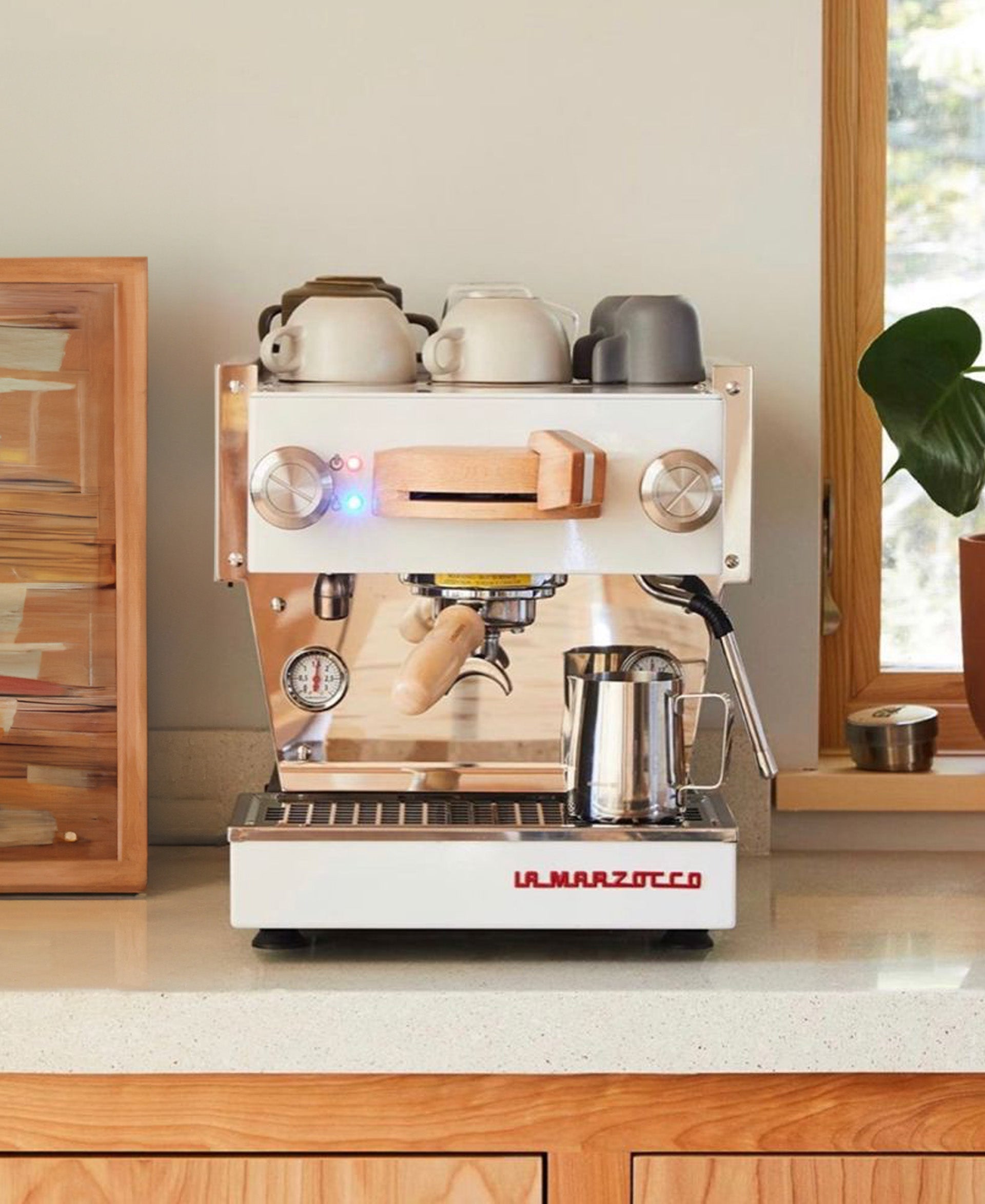
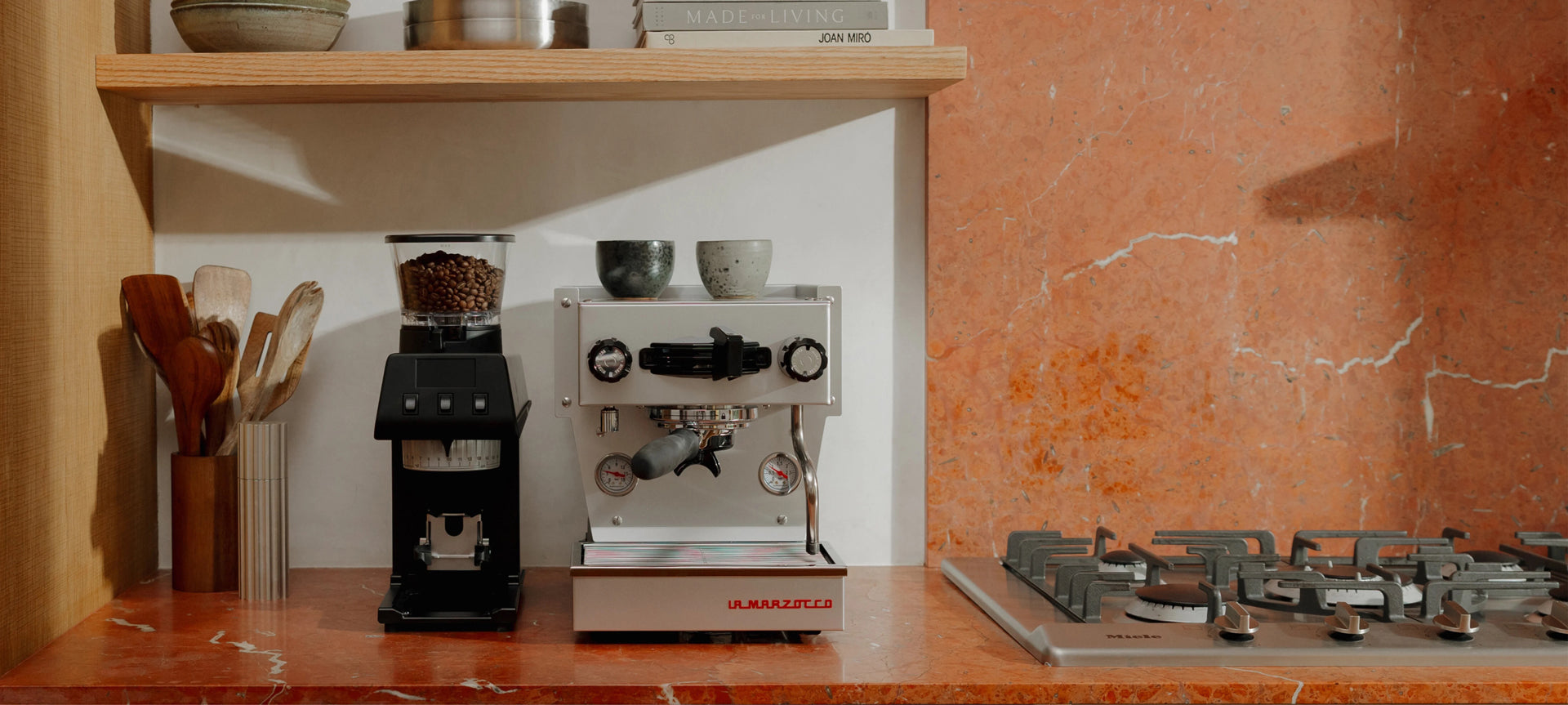
If you have the budget and you know you want the cafe-grade reference, the La Marzocco Linea Mini R is the machine most cafes' baristas put on their own kitchen counters. Same saturated brewing group as the commercial Linea Classic, same dual boiler architecture, same 15-plus year service life.

Cafe-Grade // Buy It Once
La Marzocco Linea Mini R (Silver Satin)
$6,600 Free Shipping + Click Lease Financing Shop Now →How they actually compare in the cup
Here is what the architecture changes when you taste it back to back. We have pulled identical beans and identical recipes on all three for ten years. The differences are not subjective.
The five-question buyer's test
Forget the spec sheets for a minute. Answer these five questions honestly and the architecture will pick itself.
- How many drinks per session? One: single boiler is fine. Two to four: heat exchanger. Five or more, regularly: dual boiler.
- Do you steam milk? Rarely: any. Sometimes: heat exchanger minimum. Daily lattes or cappuccinos: heat exchanger or dual boiler. A single boiler's steam is thin and slow.
- How long do you plan to own it? Two to three years (testing the waters): single boiler. Five to seven years: heat exchanger. Decade-plus: dual boiler from a maker with parts availability (La Marzocco, Rocket, Lelit).
- How much does counter space cost you? Critical: single boiler. Manageable: heat exchanger (most are 10-12" wide). You can dedicate a corner: dual boiler.
- What is your budget, all-in? Remember the grinder. Total budget under $1,000: single boiler with a decent grinder. $1,500-$3,000: heat exchanger plus quality grinder. $3,000+: dual boiler plus a serious grinder ($600-$1,200).
The comparison most reviews skip
| Factor | Single Boiler | Heat Exchanger | Dual Boiler |
|---|---|---|---|
| Price range at CMD | $300-$800 | $1,300-$2,400 | $2,000-$9,000 |
| Warm-up time | 5-10 min | 15-25 min | 20-30 min |
| Brew temp control | Decent w/ PID | Good w/ flush | Excellent, set-and-forget |
| Steam power | Limited | Cafe-grade | Cafe-grade |
| Back-to-back drinks | 1-2 min wait | None | None |
| Plumb-in option | No | Sometimes (MaraX) | Most over $2,500 |
| Expected lifespan | 5-7 yrs | 8-12 yrs | 10-20 yrs |
| Best for | Solo drinker, learning | Couples, entertaining | Daily heavy use, "buy it once" |
What we tell most customers
About half of CMD's home espresso customers come in convinced they need a dual boiler. They have seen the reviews, they like the cafe aesthetic, they have the budget. Of those, we talk roughly a third down to a heat exchanger because their actual use pattern (one or two drinks a day) does not justify the cost.
About a quarter come in looking at single boilers when their real use case (a household of three, four to six drinks a day) is going to leave them frustrated by month three. We move them up to a heat exchanger and they thank us a year later.
The honest answer almost always points to the heat exchanger as the highest-leverage purchase in the category. It is the cheapest machine that gives you the real cafe experience. For most households, that is the right answer.
Shop All Espresso Machines at CMD →The Bottom Line
Don't buy a brand. Buy an architecture that matches your life.
A $800 Breville Barista Express in the right hands beats a $5,000 dual boiler used wrong. Match architecture to use pattern first. Then pick the machine within that tier that has parts availability, dealer support, and a service record you can trust. If you want a sanity check before you commit, call us at (323) 592-3303 or email aaron@cmdepotusa.com. We will tell you the truth, even if it means selling you a cheaper machine.
Frequently Asked
Is a heat exchanger worth the jump from a single boiler?
For anyone making more than one drink per session, yes — emphatically. The ability to pull a shot and steam milk simultaneously is the single biggest workflow upgrade in home espresso, and it is the reason heat exchangers have been the cafe standard for fifty years. The cost difference ($600-$1,500) buys you a machine that will outlast a single boiler by three to five years.
Are dual boilers really better than heat exchangers?
Technically yes, in cup quality usually no — at least not in a way that justifies the price jump for a casual drinker. The temperature precision of a dual boiler matters most for advanced users who taste-dial extraction, experiment with light roasts, or want a machine that performs at cafe spec for ten-plus years. For everyone else, a quality HX delivers 90% of the experience at half the price.
Can I upgrade from a single boiler to a heat exchanger later?
Absolutely, and many of our customers do exactly that. A common path: start with a Breville Bambino or Barista Express Impress, learn fundamentals over 18-24 months, then upgrade to a Lelit MaraX or Rocket Appartamento. The grinder you bought stays. The skills you built transfer. The single boiler becomes a backup machine or sells for 60-70% of original cost.
How long does a heat exchanger take to warm up?
Plan on 15-25 minutes from a cold start for the brew group, group head, and portafilter to reach stable temperature. Most owners use a smart plug to start the machine 20 minutes before they need it. The wait is the trade-off for the cafe-grade steam pressure and temperature stability you get once it is dialed in.
What grinder should I pair with each architecture?
Single boiler: a quality $200-$400 grinder like the Baratza Encore ESP or Eureka Mignon Crono. Heat exchanger: step up to the Eureka Mignon Specialita ($600) or Mahlkönig X54 ($750). Dual boiler: the grinder needs to keep pace, so plan on $800-$1,500 — Eureka Atom 75, Niche Zero, or a Mahlkönig E65S for the serious daily setup.
Does CMD offer financing on espresso machines?
Yes. We offer Click Lease financing up to $25,000, which covers everything in our catalog including the high-end dual boilers and most commercial machines. Approvals are typically same-day. Call (323) 592-3303 or email aaron@cmdepotusa.com to get started.